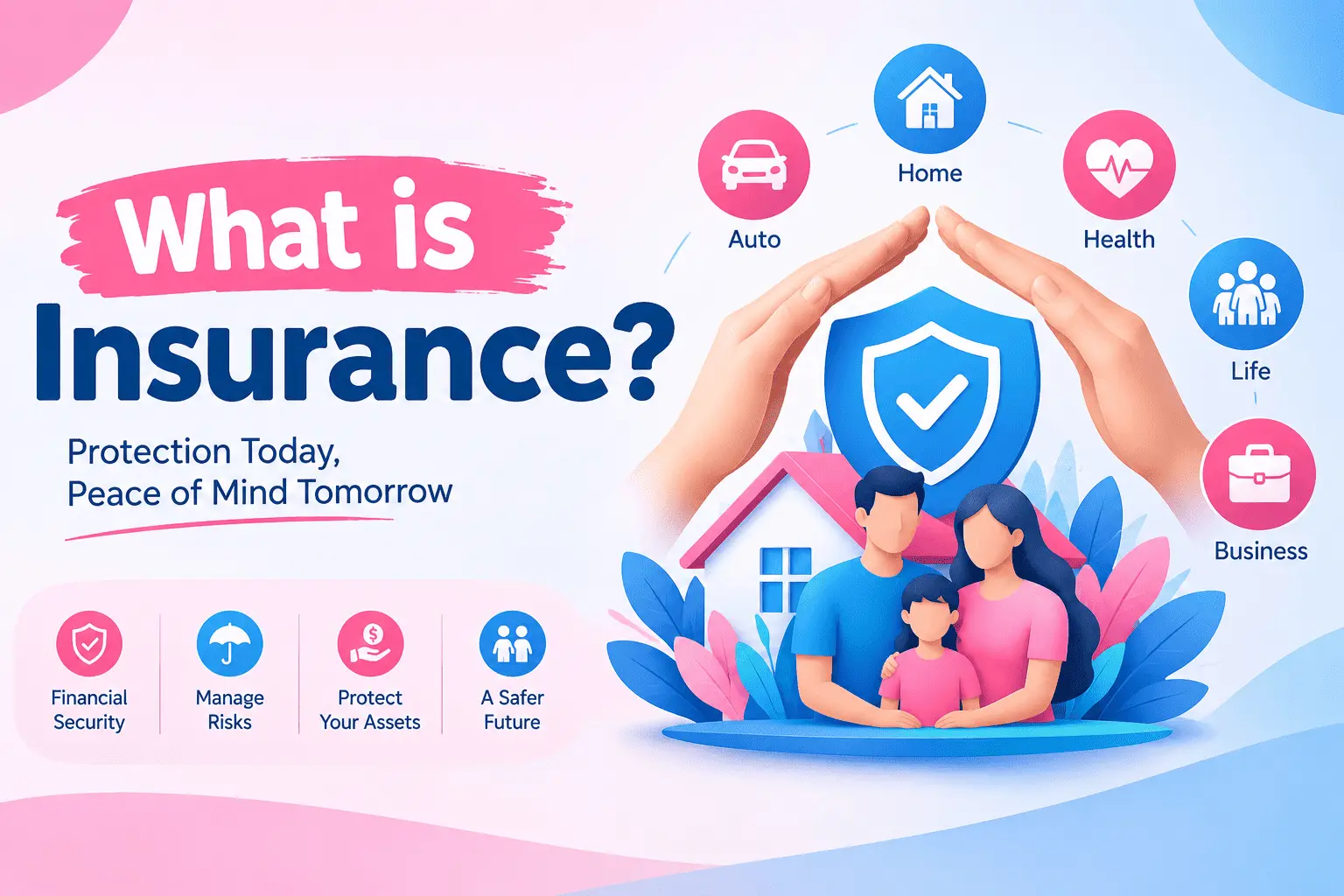
What Is Insurance ? A Complete Guide to Insurance in the USA
What is insurance-Insurance is a financial protection system that helps individuals, families, and businesses manage the financial risk of unexpected events. In the United States, people use insurance to protect their health, homes, Auto or vehicles, businesses, income, families, and personal property.
In simple terms, insurance allows you to transfer certain financial risks to an insurance company in exchange for a premium. If a covered event occurs, the insurance company may pay part or all of the eligible loss according to the terms, limits, deductibles, exclusions, and conditions of the policy.
The National Association of Insurance Commissioners (NAIC) describes insurance as a way to manage financial risks and explains that an insurance policy is a contract between the policyholder and insurer.
Because insurance laws and requirements can vary by state, consumers should consider both the insurance policy and the rules that apply in their state.
What Is Insurance ?
Insurance is a contract designed to provide financial protection against specified risks.
When you purchase an insurance policy, you generally agree to pay the insurance company a premium. In return, the insurer agrees to provide coverage for certain losses or events described in the policy.
For example:
- Auto insurance can help cover certain vehicle-related losses and liability.
- Homeowners insurance can protect against certain covered property losses and liability claims.
- Health insurance helps pay for covered medical services.
- Life insurance can provide a death benefit to eligible beneficiaries.
- Business insurance can protect businesses against certain property, liability, and operational risks.
Insurance does not necessarily cover every possible loss. Coverage depends on the specific policy, including its exclusions, limits, deductibles, conditions, and endorsements.
Simple Example of Insurance
Suppose you own a car.
You purchase an auto insurance policy and pay a monthly premium. Later, you are involved in a covered accident.
Depending on your policy:
- You report the accident.
- The insurance company investigates the claim.
- You may have to pay a deductible.
- The insurer pays eligible covered costs up to the applicable policy limits.
- You are responsible for costs that are excluded, exceed applicable limits, or otherwise are not covered.
This is the basic principle behind many forms of insurance.
Key Takeaways: What Is Insurance ?
-
Insurance protects you from certain financial risks by helping pay for covered losses.
-
You pay a premium to maintain your insurance coverage.
-
Insurance does not cover everything. Every policy has exclusions, limitations, deductibles, and coverage conditions.
-
A deductible is the amount you generally pay first toward a covered claim before the insurer pays its portion.
-
Coverage limits matter. An inexpensive policy may not provide enough protection for a major loss.
-
The cheapest insurance policy is not always the most suitable policy. Compare coverage, limits, deductibles, exclusions, and benefits—not just price.
-
Insurance requirements vary by state in the USA. Auto, business, health, and other insurance rules can differ depending on where you live.
How Does Insurance Work ?
what is insurance -Insurance works by combining the risks of many policyholders.
what is insurance-Many people pay premiums into an insurer’s pool of funds. Only some policyholders experience covered losses during a particular period. The insurer uses premiums and other financial resources to pay covered claims and operate the insurance business.
The process generally involves several important components.
1. Choosing an Insurance Policy
The consumer selects an insurance policy based on the type of protection needed.
Examples include:
- Auto insurance
- Homeowners insurance
- Renters insurance
- Health insurance
- Life insurance
- Disability insurance
- Business insurance
- Flood insurance
- Long-term care insurance
- Pet insurance
- Travel insurance
The NAIC lists many of these as common insurance categories for consumers.
2. Paying the Premium
A premium is the amount paid to maintain insurance coverage.
Premiums may be paid:
- Monthly
- Quarterly
- Semiannually
- Annually
The payment schedule depends on the insurer and policy.
3. Experiencing a Covered Event
A covered event may include an accident, illness, property damage, theft, death, or another risk specified in the policy.
Not every event is automatically covered.
4. Filing a Claim
A claim is a request for the insurance company to provide benefits or payment for a covered loss.
Depending on the insurance type, the policyholder, healthcare provider, beneficiary, or another authorized party may submit the claim.
5. Insurance Company Reviews the Claim
The insurer reviews the circumstances and determines whether the claim is covered under the policy.
The insurer may request:
- Photos
- Receipts
- Medical records
- Police reports
- Repair estimates
- Proof of ownership
- Statements
- Other documentation
6. Payment or Claim Decision
If the loss is covered, the insurer generally pays according to the policy terms.
The final amount can depend on:
- Deductible
- Coverage limits
- Coinsurance
- Actual loss
- Policy exclusions
- Applicable conditions
- Depreciation or valuation method
- Other policy provisions
Why Is Insurance Important in the United States?
Insurance can help protect people from financial losses that could otherwise be difficult to pay for themselves.
A major accident, serious illness, house fire, natural disaster, lawsuit, disability, or death can create substantial financial consequences.
Insurance can help transfer some of those risks.
Financial Protection- What is insurance
Insurance can reduce the financial impact of certain unexpected events.
For example, health insurance may help with covered medical expenses, while homeowners insurance may help with certain covered property losses.
Legal or Contractual Requirements
Some insurance may be required by law or by a contract.
For example, auto liability insurance requirements are established at the state level, and a lender may require homeowners insurance as a condition of a mortgage.
Requirements vary depending on the state, type of insurance, and circumstances.
Protection for Families-what is insurance
Life insurance can provide financial support to beneficiaries after the insured person’s death.
The money may help beneficiaries with expenses such as:
- Mortgage payments
- Household expenses
- Education costs
- Debt
- Funeral expenses
- Income replacement
Protection for Businesses
Businesses face many different risks, including property damage, liability claims, cyber incidents, employee-related risks, and interruptions to operations.
Business insurance can help manage some of these risks.
Major Types of Insurance in the USA
The U.S. insurance market contains many different types of insurance.
Below are some of the most important categories.
1. Health Insurance
Health insurance helps pay for covered healthcare services.
Depending on the plan, coverage may include:
- Doctor visits
- Hospital services
- Emergency care
- Prescription drugs
- Preventive care
- Mental health services
- Laboratory services
- Maternity care
- Rehabilitative services
2. Auto Insurance
what is insurance Auto insurance provides financial protection related to covered vehicle accidents, damage, liability, and other specified risks.
Common auto insurance coverage can include:
- Bodily injury liability
- Property damage liability
- Collision
- Comprehensive
- Uninsured motorist
- Underinsured motorist
- Medical payments
- Personal injury protection in applicable states
Exact requirements and available coverage vary by state.
3. Homeowners Insurance
Homeowners insurance is designed to protect eligible homeowners against certain covered property losses and liability risks.
A homeowners policy may provide coverage for:
- The dwelling
- Other structures
- Personal property
- Loss of use
- Personal liability
- Medical payments to others
4. Renters Insurance
Renters insurance is designed for people who rent houses, apartments, condos, or other residential properties.
It may provide coverage for:
- Personal belongings
- Personal liability
- Additional living expenses
- Certain covered losses
The landlord’s insurance generally covers the building, while renters insurance may protect the tenant’s personal property and liability.
5. Life Insurance
Life insurance provides a financial benefit to beneficiaries after the insured person’s death, subject to the policy terms.
The two broad categories commonly discussed are:
Term Life Insurance
Term life insurance provides coverage for a specified period.
For example:
- 10 years
- 20 years
- 30 years
If the insured dies while the policy is active and the claim qualifies under the policy, beneficiaries may receive the death benefit.
Permanent Life Insurance
Permanent life insurance is designed to provide coverage for a longer period and may include a cash value component depending on the policy.
Common types include:
- Whole life insurance
- Universal life insurance
- Variable life insurance
- Indexed universal life insurance
Policy structures, costs, guarantees, and investment features can differ significantly.
6.Disability Insurance
Disability insurance is designed to replace some income when an insured person cannot work because of a qualifying disability covered by the policy.
It can be especially important for people whose income depends heavily on their ability to work.
Two broad categories include:
Short-Term Disability Insurance
Short-term disability policies generally provide benefits for a relatively limited period.
Long-Term Disability Insurance
Long-term disability insurance can provide benefits for a longer period if the insured meets the policy’s definition of disability.
Definitions and eligibility requirements vary by policy.
7.Long-Term Care Insurance
Long-term care insurance is designed to help cover certain long-term care services.
Long-term care can include assistance with:
- Bathing
- Dressing
- Eating
- Mobility
- Personal care
- Assisted living
- Nursing facility care
- Certain home care services
Long-term care insurance policies vary substantially in benefits, eligibility requirements, elimination periods, benefit periods, and coverage limits.
8.Flood Insurance
what is insurance-Standard homeowners insurance generally does not provide coverage for flood damage.
Flood insurance may be purchased separately through available flood insurance programs and private insurers.
Flood risk can exist even outside areas that consumers traditionally consider high-risk.
Homeowners should review their property’s flood risk and insurance options before a loss occurs.
9.Business Insurance
what is insurance-Business insurance helps companies manage financial risks associated with their operations.
Common business insurance categories include:
- General liability insurance
- Commercial property insurance
- Commercial auto insurance
- Workers’ compensation
- Professional liability insurance
- Errors and omissions insurance
- Cyber insurance
- Business interruption coverage
- Product liability insurance
- Commercial umbrella insurance
The appropriate coverage depends on the business’s industry, location, size, employees, property, contracts, and risks.
10.Pet Insurance
Pet insurance helps eligible pet owners manage certain veterinary expenses.
Depending on the plan, it may cover some expenses related to:
- Accidents
- Illnesses
- Diagnostic tests
- Surgery
- Prescription medications
- Veterinary treatments
Coverage, exclusions, waiting periods, reimbursement percentages, and annual limits vary by insurer and policy.
11.Travel Insurance
Travel insurance can provide certain financial protections associated with covered travel-related events.
Depending on the policy, benefits may include:
- Trip cancellation
- Trip interruption
- Emergency medical expenses
- Emergency evacuation
- Lost baggage
- Travel delays
Travel insurance policies can have significant exclusions and conditions, so consumers should read the policy before purchasing.
What Is Insurance Coverage ?
Insurance coverage refers to the protection an insurance policy provides against specified risks. Depending on the policy, coverage may include eligible medical expenses, vehicle damage, property losses, liability claims, or financial benefits for beneficiaries.
Before buying insurance, review the coverage limits, exclusions, deductible, and premium to understand what the policy does and does not cover.
Insurance Terms You Should Know ( What Is Insurance )
Understanding insurance terminology makes it easier to compare policies.
Premium
A premium is the amount you pay to keep insurance coverage active.
Deductible
A deductible is an amount you generally pay yourself before the insurer pays its share of a covered claim.
For example, if a covered claim is $5,000 and your applicable deductible is $1,000, the insurer may pay $4,000, assuming the loss is otherwise fully covered and no other policy provisions apply.
Coverage Limit
A coverage limit is the maximum amount an insurer will pay for a covered loss under a particular coverage.
Claim
A claim is a request for payment or benefits under an insurance policy.
Policy
The policy is the written insurance contract describing coverage, exclusions, conditions, limits, and other terms.
Insured
The insured is the person or entity protected by the insurance policy.
Insurer
The insurer is the insurance company providing the coverage.
Beneficiary
A beneficiary is a person or entity designated to receive certain insurance benefits, such as a life insurance death benefit.
Copayment
A copayment, or copay, is a fixed amount that a person pays for a covered healthcare service under certain health plans.
Coinsurance
Coinsurance is generally a percentage of the cost of a covered healthcare service that the insured pays after meeting applicable requirements.
The NAIC identifies premium, deductible, claim, coverage, policy, insurer, insured, copayment, and other terms as common insurance terminology.
How Much Does Insurance Cost?
There is no single price for insurance in the United States.
The cost depends on the type of insurance and many other factors.
Factors That Can Affect Insurance Costs
Depending on the policy, factors may include:
- Age
- Location
- Coverage amount
- Deductible
- Claims history
- Driving record
- Vehicle type
- Property characteristics
- Health-related underwriting factors where legally applicable
- Business type
- Risk exposure
- Policy features
- Credit-based insurance information where permitted
- Discounts
- Insurance company pricing
The NAIC notes that insurance pricing can depend on the insurer’s assessment of risk and the amount of coverage selected.
Does a Lower Premium Mean Better Insurance?
Not necessarily.
A lower premium may come with:
- Higher deductible
- Lower coverage limits
- More exclusions
- Different benefits
- Narrower provider networks
- Different claim conditions
Therefore, consumers should compare the overall policy rather than looking only at the monthly premium.
What Is an Insurance Deductible?
A deductible is the amount you generally pay before the insurer pays its share of a covered loss.
For example:
Covered loss: $10,000
Deductible: $2,000
Potential insurer payment: $8,000
This simplified example assumes the entire loss is covered and does not exceed policy limits.
Higher deductibles can sometimes reduce premiums, while lower deductibles can sometimes increase premiums.
The actual relationship depends on the type of insurance and insurer.
What Is an Insurance Claim?
An insurance claim is a formal request for benefits or payment under an insurance policy.
Common Steps in a Claim
Step 1: Report the Loss
Contact your insurance company as soon as reasonably possible according to your policy.
Step 2: Document the Damage
Depending on the claim, collect:
- Photos
- Videos
- Receipts
- Estimates
- Reports
- Medical documentation
- Other evidence
Step 3: Submit Required Information
Complete the insurer’s claim process and provide requested documentation.
Step 4: Claim Investigation
The insurer reviews the circumstances and policy provisions.
Step 5: Claim Decision
The insurer determines whether and how much the policy covers.
Step 6: Payment or Dispute
If approved, payment is made according to the policy.
If a claim is denied or disputed, the policyholder may have options such as requesting an explanation, appealing where applicable, contacting the state insurance regulator, or pursuing other remedies available under applicable law.
What Does Insurance Not Cover?
Insurance policies contain exclusions.
An exclusion is something the policy does not cover.
Common examples may include:
- Intentional damage
- Normal wear and tear
- Certain maintenance issues
- Certain natural disasters
- Losses exceeding policy limits
- Events specifically excluded by the policy
The exact exclusions depend on the policy.
Never assume that an event is covered simply because you have insurance.
Read the policy documents and ask the insurer or licensed insurance professional about unclear coverage.
How to Choose Insurance in the USA
Choosing insurance requires looking at your personal, family, property, health, financial, and business risks.
Step 1: Identify Your Risks
Ask:
- What could cause a major financial loss?
- What assets do I need to protect?
- What risks are legally required to be insured?
- What risks could I afford to pay myself?
- What risks would be financially devastating?
Step 2: Determine the Coverage You Need
Consider:
- Coverage limits
- Deductibles
- Policy exclusions
- Additional coverage
- Optional endorsements
- Liability protection
Step 3: Compare Insurance Companies
Compare:
- Premiums
- Coverage
- Deductibles
- Limits
- Exclusions
- Customer service
- Financial strength information
- Claims process
- Available discounts
- State availability
Step 4: Check the Insurance Company’s License
Insurance regulation in the U.S. is largely handled at the state level.
Every U.S. state, the District of Columbia, and the five U.S. territories have an insurance department that provides consumer assistance and insurance information. (Content NAIC)
Step 5: Read the Policy
Before purchasing, understand:
- What is covered?
- What is excluded?
- What is the deductible?
- What are the limits?
- What are the conditions?
- How do I file a claim?
- When does coverage begin?
- When does coverage end?
Insurance Regulation in the United States
Insurance regulation in the United States is different from many countries because insurance is primarily regulated at the state level.
Each state has its own insurance regulatory authority.
These regulators generally oversee areas such as:
- Insurance companies
- Insurance agents
- Insurance brokers
- Policyholder protections
- Market conduct
- Licensing
- Certain insurance rates and forms
- Consumer complaints
The exact regulatory framework differs by state.
what is insurance-The NAIC provides resources that help consumers understand insurance and connect with their state insurance department.
Insurance Companies vs. Insurance Agents vs. Brokers
Understanding the difference can help consumers navigate the insurance market.
Insurance Company
The insurance company, or insurer, underwrites policies and provides the insurance coverage.
Insurance Agent
An insurance agent generally sells insurance products on behalf of one or more insurers, depending on the agent’s business relationship and licensing.
Insurance Broker
A broker generally works with consumers or businesses to help them obtain insurance and may work with multiple insurance companies, depending on the jurisdiction and business model.
Licensing rules and legal definitions can vary by state.
Employer-Sponsored Insurance
what is insurance-Many Americans receive insurance benefits through their employers.
Employer-sponsored benefits can include:
- Health insurance
- Dental insurance
- Vision insurance
- Life insurance
- Disability insurance
Employers may pay some or all of certain premiums, while employees may pay a portion.
Health insurance is particularly important in the U.S. employment market. The NAIC reports that many insured people under age 65 receive health coverage through employers, while other people obtain coverage through individual markets or government programs
Health Insurance Marketplace in the USA-what is insurance
The Health Insurance Marketplace provides a way for eligible individuals and families to shop for health coverage.
what is insurance- HealthCare.gov operates the federal Marketplace for most states, while some states operate their own Marketplaces. (HealthCare.gov)
Marketplace applicants may be evaluated for:
- Marketplace health plans
- Premium tax credits
- Cost-sharing reductions
- Medicaid
- CHIP
Eligibility depends on factors such as household circumstances, income, state, and other requirements.
HealthCare.gov states that applicants can preview plan prices and potential savings based on information such as ZIP code, household size, and estimated income. what is insurance
Insurance for Different People
what is insurance-Different people have different insurance needs.
Insurance for Individuals
Individuals may consider:
- Health insurance
- Auto insurance
- Renters insurance
- Life insurance
- Disability insurance
- Travel insurance
- Pet insurance
Insurance for Families
Families may need:
- Family health insurance
- Life insurance
- Homeowners or renters insurance
- Auto insurance
- Disability insurance
- Umbrella liability insurance
- Education and financial protection planning
Insurance for Seniors
Depending on circumstances, seniors may consider:
- Medicare
- Medicare Supplement insurance
- Medicare Advantage
- Prescription drug coverage
- Long-term care insurance
- Life insurance
Eligibility and coverage rules vary.
Insurance for Small Businesses
Small businesses may consider:
- General liability
- Commercial property
- Workers’ compensation
- Professional liability
- Commercial auto
- Cyber insurance
- Business interruption
- Employment-related coverage
What Is Insurance – Common Insurance Mistakes to Avoid
Choosing Insurance Based Only on Price
The cheapest premium may not provide the coverage you need.
Selecting Very High Deductibles Without Understanding Them
A deductible that looks attractive because it reduces the premium may create a significant financial burden after a claim.
Ignoring Exclusions
Always review exclusions and limitations.
Buying Too Little Liability Coverage
A liability claim can potentially become financially significant.
Not Updating Your Policy
Major life changes may require changes to your insurance.
Examples include:
- Marriage
- Divorce
- New child
- New home
- New vehicle
- New business
- Major renovation
- Change of employment
- Retirement
Missing Premium Payments
Failure to pay premiums can result in cancellation or termination of coverage depending on the policy and applicable rules. what is insurance
For Marketplace health insurance, HealthCare.gov specifically states that coverage does not start until the first premium is paid, when a premium is required. (HealthCare.gov)
How to Save Money on Insurance
Consumers may be able to reduce insurance costs by comparing policies and managing their coverage appropriately.
Shop Around
Get quotes from multiple licensed insurers or work with a licensed insurance professional.
Compare Coverage, Not Just Premiums
Compare:
- Limits
- Deductibles
- Exclusions
- Benefits
- Provider networks
- Claims services
Ask About Discounts
Depending on the insurance type, discounts may be available for factors such as:
- Multiple policies
- Safety features
- Claims-free history
- Good driving record
- Security systems
- Certain professional or membership affiliations
Availability varies by insurer and state.
Review Your Policy Regularly
Your insurance needs can change over time.
Review your coverage after major changes in your life, property, vehicle, income, family, or business.
Final Thoughts: Understanding What is Insurance in the USA
Insurance is an important tool for managing financial risk. Instead of attempting to pay every unexpected loss entirely from personal savings, individuals and businesses can use insurance to transfer certain risks to an insurer in exchange for premiums.
The right insurance coverage depends on your individual circumstances, location, assets, income, family situation, business activities, and risk tolerance.
When comparing insurance, look beyond the premium. Consider the coverage, deductible, limits, exclusions, benefits, insurer, claims process, and applicable state requirements.
Frequently Asked Questions About Insurance in the USA
What is insurance in simple words?
Insurance is a financial protection system. You pay a premium to an insurance company, and the company agrees to provide coverage for certain risks and losses described in your policy.
Why do people need insurance?
People use insurance to manage financial risks associated with events such as accidents, illnesses, property damage, lawsuits, disability, and death.
What are the main types of insurance in the USA?
Major types include:
- Health insurance
- Auto insurance
- Homeowners insurance
- Renters insurance
- Life insurance
- Disability insurance
- Long-term care insurance
- Flood insurance
- Business insurance
- Pet insurance
- Travel insurance
How does an insurance policy work?
what is insurance-You pay a premium for coverage. If a covered event occurs, you submit a claim or use the policy’s benefits. The insurer evaluates the claim and pays eligible covered expenses according to the policy.
What is an insurance premium?
A premium is the amount you pay to maintain your insurance coverage.
What is a deductible?
A deductible is the amount you generally pay toward a covered loss before the insurer pays its portion.
What is an insurance claim?
A claim is a request made to an insurance company for payment or benefits under an insurance policy.
What is an insurance policy?
An insurance policy is the written contract between the policyholder and insurance company that describes the coverage, exclusions, limits, conditions, and other terms.
Is insurance required in the United States?
Some insurance is legally required in particular circumstances, while other insurance is optional but may be required by a lender, employer, contract, or other agreement.
Requirements vary by state and insurance type.
Is health insurance mandatory in the USA?
Federal and state rules concerning health coverage and financial consequences can change. Health insurance requirements and programs also differ by individual circumstances and state. Consumers should check current federal and state rules rather than relying on outdated information.
Can I buy insurance directly from an insurance company?
Yes. Some insurance companies sell policies directly to consumers through websites, phone systems, or other channels. Consumers can also purchase insurance through licensed agents or brokers.
Can I compare insurance companies online?
Yes. Consumers can research insurance companies and compare available coverage, prices, policy features, and other factors. However, the cheapest quote is not necessarily the same as the most suitable coverage.
Does insurance cover everything?
No. Insurance policies contain coverage limits, exclusions, deductibles, conditions, and other restrictions. Always review the policy before assuming a particular loss is covered.
What happens if my insurance claim is denied?
Ask the insurer for the reason for the denial and review the applicable policy language. Depending on the situation and state, you may have an appeal process or may be able to contact your state insurance department for assistance.what is insurance
Who regulates insurance companies in the USA?
Insurance is primarily regulated at the state level. Each U.S. state, Washington, D.C., and the five U.S. territories has an insurance department or regulatory authority serving consumers.
How can I find an insurance company in my state?
You can research insurers licensed in your state through your state insurance department or other official regulatory resources.
How often should I review my insurance?
Review your coverage at least when major life or financial circumstances change, such as purchasing a home, getting married, having a child, buying a vehicle, starting a business, or changing employment.